
Talk through the pattern
Tell us when it started, what movements make it worse, what helps, and what you’ve had to change because of it.
Chiropractic care
Neck pain, back pain, joint stiffness, headaches, and recurring aches can change how you move through the day. We start with an exam, look at the areas that aren’t moving well, and explain whether chiropractic care makes sense before we adjust.

What brings people in
Maybe your neck tightens every time you drive. Maybe your low back flares after sitting, lifting, or sleeping. Maybe one shoulder, hip, rib, knee, ankle, or foot keeps making normal movement feel off. We check how the area moves, what is guarding around it, and what may be forcing your body to compensate.
Exam before adjustment
The first step isn’t guessing. We ask what changed, test the painful area, check related joints, and look for signs that chiropractic care is appropriate. If an adjustment belongs in the visit, we explain where we’re focusing and why.
Tell us when it started, what movements make it worse, what helps, and what you’ve had to change because of it.
We look at range of motion, posture, orthopedic findings, soft tissue guarding, and the joints that may be involved.
Your first visit includes an exam and x-rays before the doctor explains the care recommendation. Ongoing visits may include spine adjustments, extremity adjustments, soft tissue support, or home guidance.
You should leave knowing what we found, what we recommend, and what response we’re watching for after care begins.
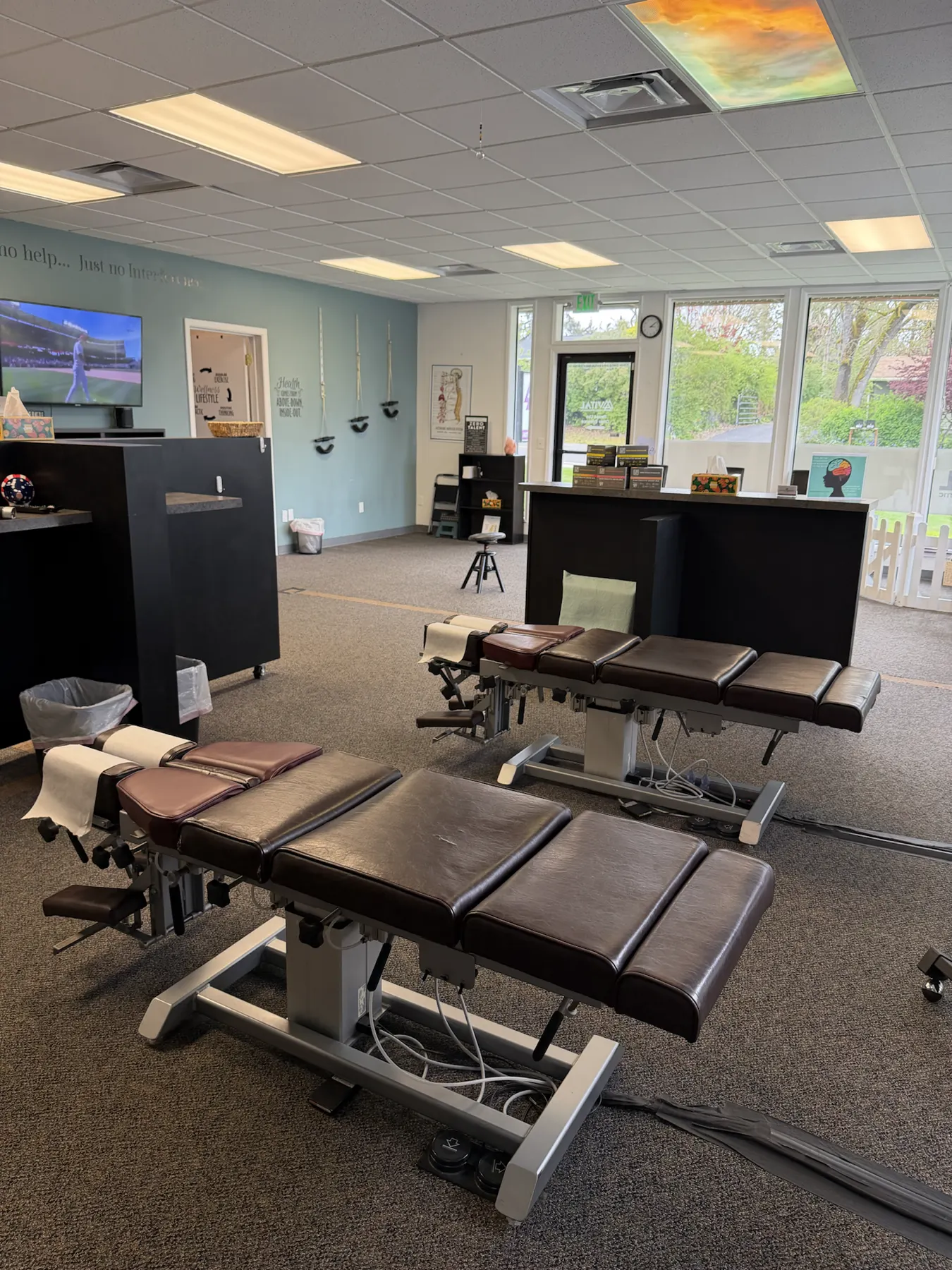
Full-spine and extremity care
A stiff low back can involve hips or pelvis mechanics. Headaches can be tied to neck tension and upper-back restriction. Shoulder, wrist, knee, ankle, or foot problems can change how the spine has to compensate.
When the exam supports it, we may adjust the spine, ribs, pelvis, or extremity joints. The goal is practical: help the irritated area move better, reduce guarding, and give your body a better chance to settle down.
Common care goals
We check neck motion, upper-back mechanics, posture strain, and headache patterns that may respond to chiropractic care.
Low back, pelvis, hip, and rib restriction can affect each other, so we examine how the whole area is moving.
Extremity adjusting may be part of care when a joint finding connects to your symptoms and daily movement limits.
What makes care practical
Good chiropractic care should not feel like the same routine every visit. We use the exam to decide where to start, what to leave alone, and when massage, imaging, home guidance, or another next step makes more sense.
Request a chiropractic visit
Choose a clinic, pick the windows that usually work, and leave your phone number and email. This doesn’t book instantly; we’ll confirm the exact appointment with you.